Portable Low-Field MRI at the Point of Care: Expanding Access Through Open Source, AI and Integrated Sensing
Details
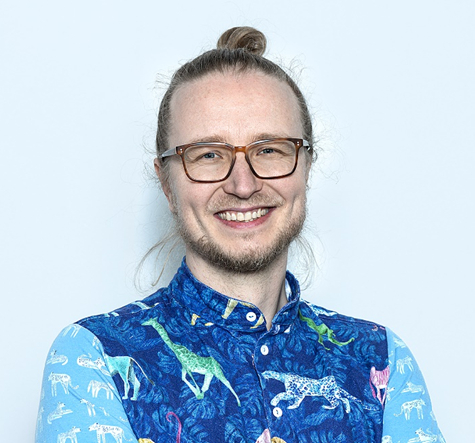
| Presenter: | Lukas Winter |
| Title: | Portable Low-Field MRI at the Point of Care: Expanding Access Through Open Source, AI and Integrated Sensing |
| Affiliation: | Physikalisch-Technische Bundesanstalt (PTB), Berlin Open Source Imaging Initiative (OSI²) e.V., Berlin |
| Date: | 12.03.2026 |
| Time: | 17:00 h |
| Place: | Building C (ZEVS), third floor, room "Kolloquium", and online via Zoom |
Contents of the Talk
Magnetic Resonance Imaging (MRI) remains one of the most powerful diagnostic technologies in modern medicine. Recent advances in low-field MRI—particularly at field strengths below 0.1 T—are reshaping the landscape by enabling compact, portable, point-of-care systems. At these lower field strengths, safety requirements and infrastructure constraints are significantly reduced, opening new possibilities for deployment beyond traditional radiology suites. At the same time, AI-driven reconstruction and denoising techniques compensate for reduced signal-to-noise ratios, helping to restore diagnostic image quality. The convergence of low-field MRI with complementary sensor technologies further expands the potential for hybrid platforms in both medical and industrial applications.
Through international collaboration, the affordable and portable open-source MRI scanner OSI² ONE has been developed at the PTB. The system includes detailed design, and construction plans for hardware modules, operational software, open data formats, image reconstruction pipelines, and documentation to facilitate certification as a medical device. This open-source reference platform is now being successfully replicated worldwide and serves as a valuable resource for collaboratively advancing low-field MRI and its applications. Open-source strategies were deliberately chosen to enable sustainable low-cost production and maintenance, foster collaboration, and maximize the technology’s innovation potential. In the long term, this approach aims to provide essential imaging capabilities in remote and underserved regions, lower barriers for clinics and research sites with limited resources and ultimately help reduce global health inequalities.
Short CV
After studying electrical engineering and information technology at the RWTH-Aachen (2009) and finishing his PhD in Ultrahigh-Field MRI at the Humboldt-University Berlin (2014), Lukas moved to the Physikalisch-Technische Bundesanstalt (PTB) in Berlin, Germany (2018), where he is currently staff scientist and principal investigator. His current research interest focusses on open-source hardware and methodology for low-field MRI and MR safety. Lukas is the founder and current chair of the non-profit Open Source Imaging Initiative (OSI² e.V., www.opensourceimaging.org) and he is actively engaged in the ISMRM and ESMRMB organizations. Lukas firmly believes that a stronger investment in open-source and non-exclusive collaboration is a global win-win for science, healthcare and society.